The PROPS Group (...see Alumni here)
Professor Galen Halverson
James McGill Professor and T.H. Clark Chair
 I integrate sedimentology, stratigraphy, and isotope geochemistry to reconstruct ancient environments within the context of secular and progressive tectonic, biospheric, and climatic evolution of the earth. The underlying theme of my research is to reconstruct paleoenvironmental change spanning from the middle Proterozoic to the early Phanerozoic (ca. 1800 to 500 ma) and to understand the interconnections between tectonics (i.e., supercontinental break-up and assembly), seawater chemistry and ocean redox, severe climatic fluctuations (including snowball Earth), and the origin and diversification of eukaryotes. This research is fundamentally field-based and geared around detailed geological studies of sedimentary basins that formed during this time.
Dr. Thi Hao Bui
Research Associate and Stable Isotope Lab Deity (PhD, McGill 2015)
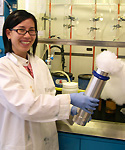 Gas hydrates attract broad scientific interest because of their important role in the global carbon cycle and their potential as an energy resource and geological hazard. Because the majority of global gas hydrate reservoirs have formed in marine sediments, especially in convergent margins, different geophysical and geochemical techniques have been developing to identify gas hydrate distribution and abundance in marine sediments. Among those, pore water sulfate profiles appear to be a simple tool to estimate the methane fluxes and gas hydrate saturation contents. It is clear in a broad sense that systems dominated by methane migrating from deep sources with higher methane fluxes will be characterized by shallow sulfate methane transition (SMT) depths and high average gas hydrate saturation states. However, SMT depths are not only controlled by the underlying methane flux, but they also depend on the availability of sulfate from the overlying sediment column. It is therefore important to understand the integrated microbial processes controlling sulfur cycling in the system.
Dr. Kelly Tingle
Postdoctoral (NSERC CIRTA) Fellow (2026–)
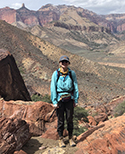 I am interested in the Proterozoic fossil record of early eukaryotes: the microscopic, soft-bodied remains of ancient ancestors of modern animals, plants, and fungi. I integrate microscopy, petrography, and geochemistry to gain insight into the ecological and environmental context of early eukaryotic evolution. The two main themes of my research include (1) understanding the timing and geobiological effects of the transition to the modern eukaryote-dominated marine biosphere and (2) investigating the processes by which microbial eukaryotes become fossilized.
Charlotte Spruzen
PhD student (2021–), FRQNT Fellow, Earth and Planetary Sciences

For my PhD project I’m focusing on Neoproterozoic (1000 – 542 million years ago) microbialites, which are ancient carbonate rocks built by microbes. My fieldwork is based in Yukon, Canada (traditional territory of the Tr’ondëk Hwëch’in and Nacho Nyak Dun First Nations). To understand microbial reefs in this area, I use microscopy to investigate the range of fine-scale features in microbialites, and I also measure rare earth elements preserved in early-precipitating cements to understand the chemistry of the water in which these organisms lived. In addition, I work at stratigraphic scale to examine the large-scale structure of reef assemblages within sedimentary basins, and I’m aiming to tie this stratigraphy into Re-Os radiometric ages.
Claire Musajo
PhD student (2023–), Petrescu Fellow, Earth and Planetary Sciences

Ajani Bissick
PhD student (2024-), FRQNT PhD Fellow, Earth and Planetary Sciences

Rhythmic patterns of sedimentation have traditionally been attributed to a range of mechanisms, including tectonic and climatic forcing. In tectonically active settings such as foreland basins, however, distinguishing the relative contributions of these drivers can be challenging, particularly when they operate at similar temporal scales. Using a combination of facies analysis and sequence stratigraphy, my PhD project focuses on disentangling the interactions between climate and tectonics recorded across the foreland basins and associated carbonate platforms of the Ediacaran Nama Group.
Ava Whitehead
PhD student (2024-), FRQNT PhD Fellow, Earth and Planetary Sciences
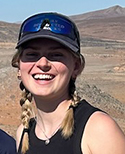
My PhD research focuses on the study of microbialites (specifically thrombolites) as biosignatures within the rock record. In particular, I use Ediacaran-aged thrombolites from the Nama Group, Namibia, as a case study for understanding the environmental conditions and microbial processes that cause them to form. By using field work, petrography, SEM, and geochemical analysis techniques, I aim to add to the body of work that investigates these ancient carbonate structures as potential astrobiological targets. By improving our understanding of microbialite formation and preservation here on Earth, we can expand our toolkit in the to search for biosignatures on other terrestrial planets, such as Mars
Adrian Machuca
PhD student (2026-), Earth and Planetary Sciences
Junias Ndeujema
MSc student (2026-), Earth and Planetary Sciences
Ariane Legault
MSc student (2026-), Earth and Planetary Sciences
Cailtyn Davis
BSc student (2025-), Earth and Planetary Sciences